Livingstone
Miyoba Nzala
Echoes in the Cobblestones: A Livingstone Town Tour
The air in Livingstone vibrates with a peculiar hum, a blend of equatorial heat, the distant roar of Victoria Falls, and the whispers of a colonial past. Stepping off the main artery that leads to the mighty spectacle, our Livingstone town tour felt less like a guided march and more like an unfolding of stories, each building and corner holding a tale waiting to be unearthed.
Our guide, a man whose family had lived in Livingstone for generations, had a twinkle in his eye that promised more than just historical dates. He began our journey at the magnificent Victoria Falls Railway Station. Its red-brick façade, now a museum, stood as a grand testament to the golden age of railway travel. He spoke of grand arrivals, of explorers and dignitaries arriving to witness the smoke that thunders, and of the sheer logistical marvel it represented to carve this monument to steam power into the heart of Africa. We imagined the chugging locomotives, the steam billowing against the azure sky, a stark contrast to the quiet stillness of the present.
From there, we meandered through streets lined with buildings that echoed a different era. The old Post Office, another imposing red-brick structure, still exuded an aura of importance. Our guide recounted tales of busy telegraph lines, of urgent dispatches and letters carrying news from distant lands, a crucial lifeline for this outpost. He pointed out the subtle architectural details – the arched windows, the sturdy verandas – that spoke of pragmatism and a certain British colonial aesthetic.
We paused at the District Commissioner’s Office, a building that, while now housing administrative functions, still carried the weight of authority. He spoke of the administrators who once held sway here, of decisions made that shaped the lives of the people of this region. It was a delicate dance, acknowledging the history without dwelling solely on the inequities, but rather on the human element, the individuals who navigated the complexities of their time.
The true charm of the town tour, however, lay in the smaller, more intimate details. We visited a local market, vibrant with colour and the aroma of spices. Here, the guide’s knowledge shifted from grand narratives to the pulse of daily life. He introduced us to local vendors, shared insights into the provenance of the produce, and even helped us haggle for a beautifully woven basket, the transaction punctuated by laughter and friendly banter. The echoes of the past here were louder, more immediate – the same bustling commerce, perhaps, conducted with the same animated spirit.
He also led us to a serene Anglican church, its quiet interior a welcome respite from the midday sun. Standing within its cool stone walls, he spoke of the missionaries who had played a significant role in the town’s development, of their efforts to bring education and spiritual guidance. It was a reminder of the multifaceted influences that had shaped Livingstone, a confluence of cultures and ambitions.
What made this Livingstone town tour so engaging was not just the impressive architecture or the historical anecdotes, but the guide’s ability to weave a narrative that felt alive. He brought the buildings to life with personal stories, with observations about the present-day inhabitants interacting with the legacy of the past. He showed us how the old colonial buildings, repurposed and integrated into the fabric of modern Livingstone, were not just relics but living entities, adapting and evolving.
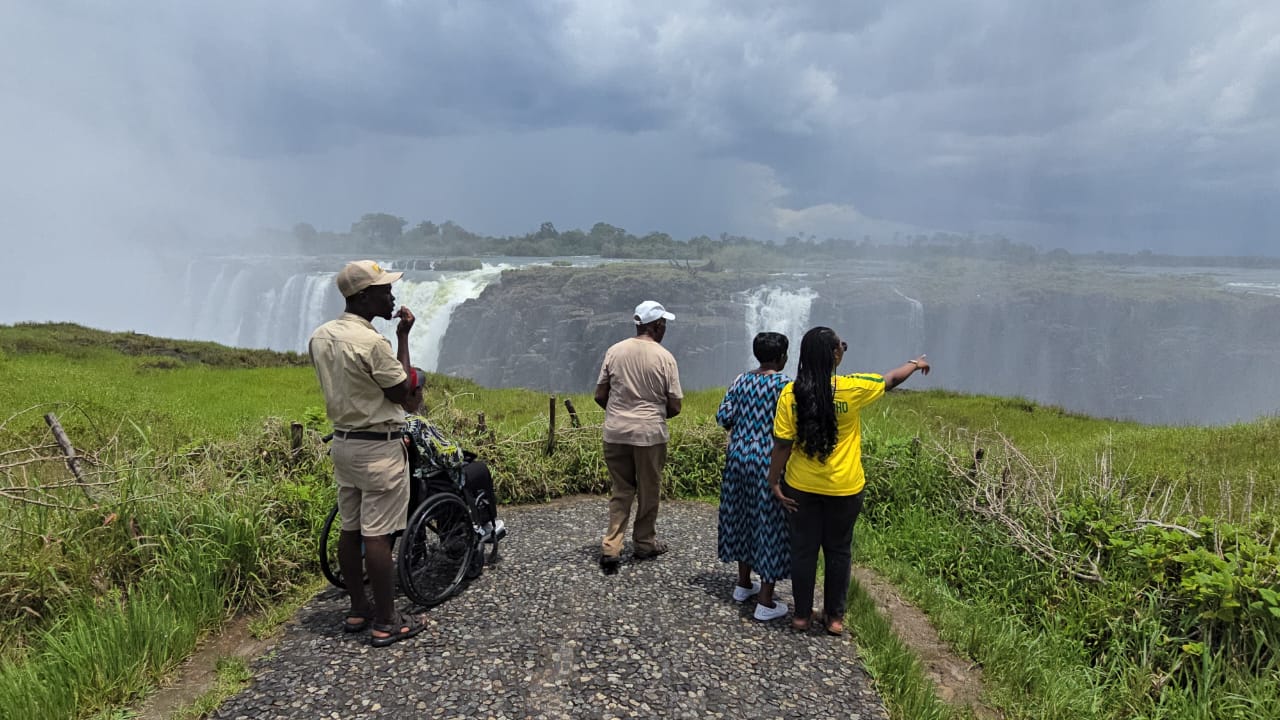
As we concluded our tour, standing by the Zambezi River, the distant mist of Victoria Falls a constant, majestic presence, I felt a deeper appreciation for Livingstone. It wasn’t just a gateway to a natural wonder; it was a town with a soul, a place where the echoes of its past resonated in the present, not as a burden, but as a rich and compelling story waiting to be heard by those willing to listen. The cobblestones had their tales, and our Livingstone town tour had skilfully helped us to hear them.